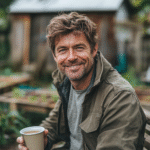
On 30 August, Will Soper completed a Will Soper blood transfusion rescue that required him to cover 1.5 miles and gain 1,000 feet of elevation in 31 minutes, carrying packed blood bags up North Carolina’s Shortoff Mountain to reach a fallen climber who was losing blood faster than help could otherwise arrive, according to Outside Online.
Jacob Gregory had fallen 20 feet down a rock face and suffered a critical internal injury while leading an ascent with his son. His son called emergency services. By the time responders reached Gregory, he was in critical condition and bleeding severely.
How the Will Soper Blood Transfusion Rescue Unfolded
Soper was teaching a training course roughly two hours away when the call came in. He made his way to the trailhead and had already climbed halfway up the mountain when word came over the radio: the patient needed blood. Soper turned back down, assembled blood bags in a cooler with ice and all the equipment required for a transfusion, loaded it into a backpack, and headed straight back up.
The climb to where rescuers had set up a rappel down to Gregory took Soper 31 minutes, according to Newser. That is not a trivial distinction: the terrain at Shortoff Mountain is, as Soper put it, ‘notoriously remote and challenging to access.’ He told Outside Online that the area is among the most common on the mountain for rescues. Near the summit, climbers navigate roughly 200 feet of rock scramble before reaching a rappel point that drops them into Linville Gorge, where the bases of most climbing routes sit.
‘As soon as I heard the dispatch, I knew it would be a challenging rescue,’ Soper said.
Soper is honest about the nature of his ascent. ‘In all honesty, “run” is a little bit hyperbolic,’ he said. ‘I maintained a fast hiking or jogging pace and made sure I didn’t stop for any breaks.’ Whatever label you put on it, the physical output, carrying medical supplies up 1,000 feet of elevation over a mountain trail, under time pressure, was the direct reason a transfusion was possible at all.
24 Agencies, One Patient
The scale of the response on 30 August reflected just how difficult the location makes any rescue. 24 agencies answered the call, a number Soper himself acknowledged when he said: ‘To every responder who answered that call: thank you.’ That quote came from Gregory’s family, who posted it on a GoFundMe page set up to support them during his recovery. ‘You saved a life and brought a husband, father, brother, son, friend, and loved one to safety,’ the family wrote.
Soper volunteers for Burke Rescue Inc. and SAR, a volunteer lifesaving unit serving central North Carolina. Coordinating that many agencies across such difficult terrain is, in itself, a logistical challenge: radios can be unreliable, access routes vary, and the time cost of any misstep multiplies quickly at elevation.
Once Gregory was somewhat stabilised at the scene, he was transported to Atrium Carolinas Medical Center in Charlotte. His recovery status remains uncertain.
A Call for More Volunteers
Soper did not use the attention the rescue attracted to take a bow. He used it to recruit. ‘If you read this and thought, I want to help, please contact your local rescue squad or search and rescue team,’ he said.
The Will Soper blood transfusion rescue underlines a straightforward reality about mountain emergencies in remote terrain: physical conditioning is not incidental to the work, it is part of the job. The ability to move fast with medical equipment, in a place where no helicopter can simply hover and hand over supplies, can be the margin between a patient who survives and one who does not.
Gregory’s family put it plainly in their GoFundMe message: without the more than two dozen agencies and the individuals who pushed hardest to get there, there would have been nothing to recover from.